Warum Benetics AI einen KI-Agenten für die Baustelle startet, obwohl er noch nicht fertig ist
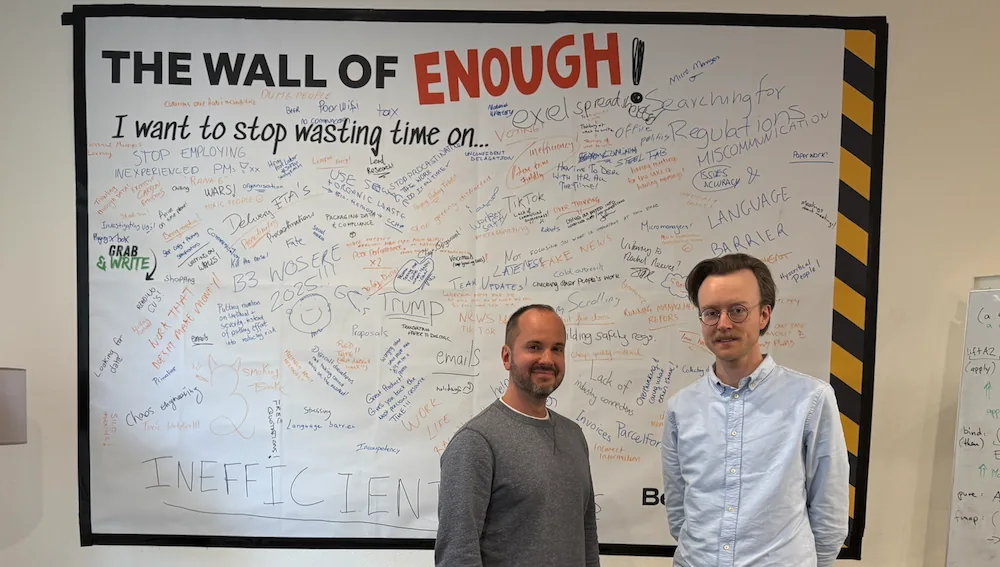
Benetics AI hat einen neuen KI-Assistenten für die Baupraxis veröffentlicht. Nicht als ausgereiftes, vollautomatisches System und auch nicht als fertiges Produkt – sondern ganz bewusst in einem frühen Entwicklungsstadium. „Wir wollten unseren Nutzern möglichst früh etwas Sicheres an die Hand geben“, sagt Johan Tibell, CTO und Mitgründer von Benetics AI. „Denn nur wenn Menschen mit dieser Innovation arbeiten, verstehen wir wirklich, was ein solches System leisten muss.“

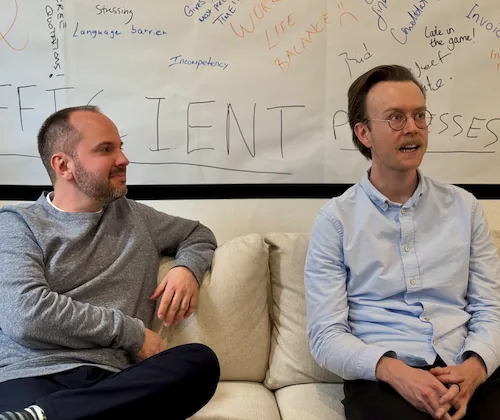
Gemeinsam mit Product Manager Paul Siermann arbeitet er daran, wie Software im Bau künftig eingesetzt wird: nicht mehr nur als Werkzeug, sondern als aktive Unterstützung, die bei der Arbeit selbst Hand anlegt.
Vom Assistenten zum KI-Agenten auf der Baustelle
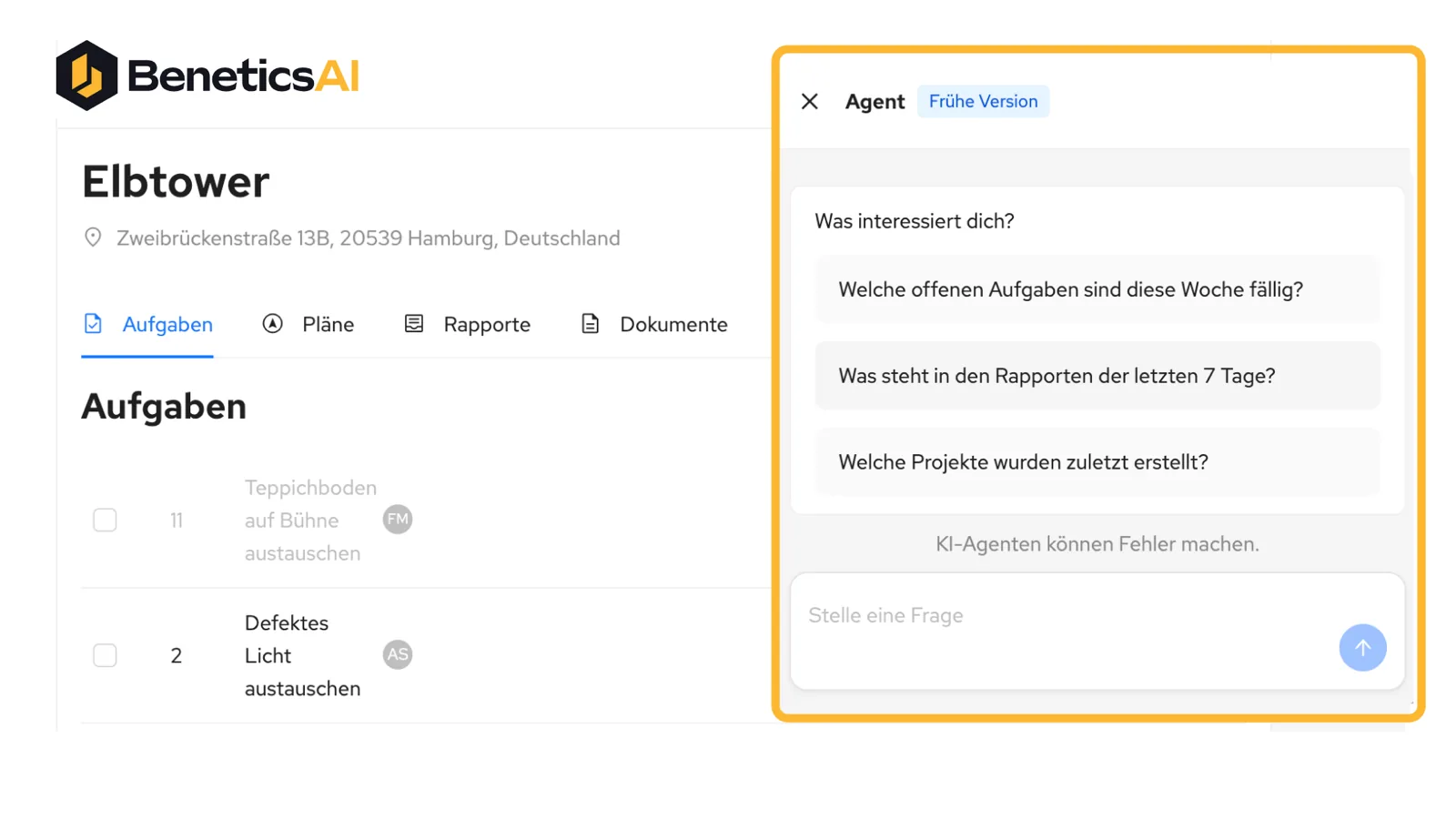
Dabei geht es um den Unterschied zwischen einem KI-Assistenten und einem echten KI-Agenten. Was Benetics AI heute bietet, ist ein KI-Assistent: Er beantwortet Fragen zu Projekten, Aufgaben, Berichten, Dokumenten und Plänen und hilft, Informationen schneller zu finden und einzuordnen. Ein echter KI-Agent geht weiter: Er führt Aufgaben aus, schlägt Änderungen vor, bereitet Arbeitsschritte vor, ordnet Abläufe neu – und wird perspektivisch selbstständig tätig.
„Ein Assistent liefert Antworten. Ein Agent erledigt Dinge“, erklärt Johan. „Dort wollen wir hin. Aber zuerst müssen wir verstehen, was im Alltag wirklich hilft.“ Dieser Weg – vom Assistenten hin zur teilautomatisierten Abwicklung von Abläufen – zeigt, wohin sich Software im Bau entwickelt. Es ist nur eine Frage der Zeit.
Warum KI im Bau so sehr an Relevanz gewinnt
Die Baubranche gehört zu den größten Industrien weltweit und hat gleichzeitig enormen Nachholbedarf, wenn es um effizientere Abläufe geht. Trotz zahlreicher Softwarelösungen ist der Alltag geprägt von zeitraubenden Abstimmungen zwischen Büro und Baustelle, inkonsistenten Informationen, hohem manuellen Dokumentationsaufwand und zahlreichen Rückfrage-Schleifen.
Genau hier setzt KI an. „Bisher war Software ein Werkzeug“, sagt Johan. „Nun kann sie beginnen, Teile der Arbeit selbst zu übernehmen.“ Gerade im Bau ist das ein entscheidender Hebel. Denn administrative Tätigkeiten wiederholen sich, kosten Zeit und schaffen keinen direkten Mehrwert. Administrative Arbeit ist unproduktiv.
Benetics AI geht deswegen einen anderen Weg als viele klassische Lösungen. Im Mittelpunkt stehen bei Benetics AI schon immer die Daten von der Baustelle, direkt von den BauarbeiterInnen. „Unsere Daten kommen direkt von den Menschen vor Ort“, sagt Paul. „Früher steckten sie abgeschottet in Nachrichten, E-Mails, Telefonaten oder auf Papier. Heute sind sie strukturiert für alle verfügbar.“ Für Benetics AI wird damit möglich, was vielen anderen KI-Lösungen fehlt: ein Verständnis dafür, was auf der Baustelle tatsächlich passiert – und zwar in Echtzeit.
Warum wir „live“ sind – obwohl noch nicht alles rund läuft
Die Entscheidung, den Assistenten in einer frühen Version zu veröffentlichen, ist bewusst gefallen. „Am Schreibtisch kann man nur begrenzt sinnvoll entwickeln“, sagt Johan. „Irgendwann braucht man echte Projekte, echte Menschen.“ Im Bau gilt das besonders, weil die Bedingungen vor Ort vollkommen anders sind als im Büro.
„Der schnellste Weg zu einer wirklich guten Lösung ist, sie früh einzusetzen“, ergänzt Paul. Natürlich bringt das auch Herausforderungen mit sich. Manche Anwender erkennen einen Nutzen, andere werden enttäuscht sein, weil sie an Grenzen stoßen.
„Das ist uns bewusst“, sagt Paul. „Aber genau so lernen wir - natürlich auf verantwortungsvolle Weise.“ Die Einführung wird von Paul eng begleitet – mit transparenter Kommunikation, im direktem Austausch mit den Anwendern und dem strukturierten Sammeln von Feedback.
Was der KI-Assistent heute schon kann – und wo seine Grenzen liegen
Der Benetics AI Assistent wertet heute bereits zentrale Projektdaten aus, analysiert Aufgaben und Berichte, versteht Pläne und erklärt Zusammenhänge im Projekt. Projektverantwortliche können Fragen stellen, statt sich manuell durch verschiedene Menüs zu klicken und Informationen zu suchen. Das spart Zeit und reduziert Abstimmungen.
Was der KI-Assistent nicht tut, ist Aktionen selbstständig auszuführen. Und wie bei jeder KI in diesem Stadium kann es vorkommen, dass er Antworten liefert, die zwar plausibel klingen, aber im konkreten Fall nicht zielsicher weiterhelfen.
Sicherheit ist das A und O
Daher steht in diesem frühen Live-Stadium die Sicherheit an erster Stelle. Dem Assistenten wurden Grenzen auferlegt. Er greift nur auf Daten zu, die ihm freigegeben wurden. Er kann an den Daten weder Änderungen vornehmen noch Inhalte löschen oder selbstständig erstellen.
„Unser KI-Assistent kann nichts verändern oder kaputt machen“, sagt Johan. „Er liest nur und gibt Antworten – mehr nicht.“ So entsteht eine sichere Grundlage, um bei minimalem Risiko zu lernen, was zählt.
Was einen guten KI-Agenten im Bau ausmacht
Ein wirklich hilfreicher KI-Agent im Bau ist mehr als nur eine Suchfunktion mit Chat. Dafür braucht er ein tiefes Verständnis vom Projektkontext, Zugriff auf die richtigen Informationen und die Fähigkeit, in sinnvoller Weise zu unterstützen. „Ein Agent besteht aus einem Basis-System und den passenden Werkzeugen“, erklärt Johan. „Er benötigt Werkzeuge, um Informationen zu finden, und Werkzeuge, um Aufgaben umzusetzen.“ Das umfasst auch jede Menge bauspezifisches Fachwissen, etwa zu Normen, Materialien und Vorschriften.
Ziel ist es, nicht nur Fragen zu beantworten, sondern eine echte Unterstützung im Arbeitsalltag zu bieten.
Bedienung muss zur Baustelle passen
Damit all das funktioniert, muss die Bedienung auf die Realität der Baustelle ausgerichtet sein. Die aktuelle Eingabe über geschriebenen Text ist nur ein erster Schritt. „Die Eingabe per Sprache, Bilder und Videos wird eine wichtige Rolle spielen“, sagt Johan. Denn auf der Baustelle wird anderes gearbeitet als am Schreibtisch im Büro. Paul ergänzt: „Ein System bringt nichts, wenn niemand versteht, was es kann. Wir müssen es so gestalten, dass es im richtigen Moment in der richten Form unterstützt.“
Woran wir Erfolg messen
Für Benetics AI steht zum aktuellen Zeitpunkt nicht die breite Nutzung im Vordergrund. „Wenn es Menschen gibt, die unseren KI-Assistent gerne nutzen, ist das ein gutes Zeichen“, sagt Johan. Entscheidend sind die regelmäßige Nutzung, der konkreter Mehrwert im Alltag und das ehrliche Feedback aus der Praxis.
Die große Vision: Software als Akteur bei der Ausführung
Langfristig geht es um mehr als nur eine neue Funktionalität. Wenn sich der Ansatz eines KI-Agenten durchsetzt, verändert sich die Rolle von Software im Bau grundlegend.
Statt Software nach einem Regelwerk zu bedienen, formulieren Nutzer ihre Aufgaben frei, bereiten Abläufe nur noch vor - und die Software wird selbst aktiv. Warum das wichtig ist? „Wer im Bauwesen arbeitet, will bauen“, sagt Paul. „Was wir den Menschen an administrativer Arbeit abnehmen, macht die eigentliche, die produktive und erfüllende Arbeit besser.“
Über Benetics AI
Benetics AI ist ein Zürcher Softwareunternehmen für das Bauwesen. Ziel des Unternehmens ist es, die Zusammenarbeit zwischen Büro und Baustelle zu verbessern und Abläufe einfacher zu gestalten. Im Mittelpunkt stehen dabei die Menschen auf der Baustelle.
Über die Autoren
Johan Tibell ist CTO und Mitgründer von Benetics AI. Er war über 15 Jahre als Softwareentwickler bei Google tätig, wo er an großen, skalierbaren Systemen arbeitete.
Paul Siermann ist Produktmanager bei Benetics AI. Er bringt langjährige Erfahrung aus Unternehmen wie Beekeeper, notime und Angle Audio mit. Seinen Fokus legt Paul darauf, praktische Anforderungen aus dem Arbeitsalltag in einfach anzuwendende technische Lösungen zu übersetzen.